Iran Rosales

Iran Rosales

B.S. in Marine Science
University of Hawaiʻi at Hilo
NOAA Ernest F. Hollings Scholar, Class of 2025

01

About Me

I care about the ocean and the people who depend on it. I hope to help develop more sustainable practices around the world and take on the challenges our oceans face, from habitat loss and pollution to overfishing.

Through science and storytelling, I hope to build a career in the blue economy, one that opens up opportunities for communities that rely on healthy marine ecosystems.

Always feel free to reach out:

  • Fisheries Science
  • Coastal Geomorphology
  • Global Seafood Supply Chain
  • Drone Mapping
  • Storytelling

02

Research Projects

2026 – PresentSilver Spring, MD

Using Prices to Understand Fish Length in an Economically Informed Stock Assessment of Golden Tilefish

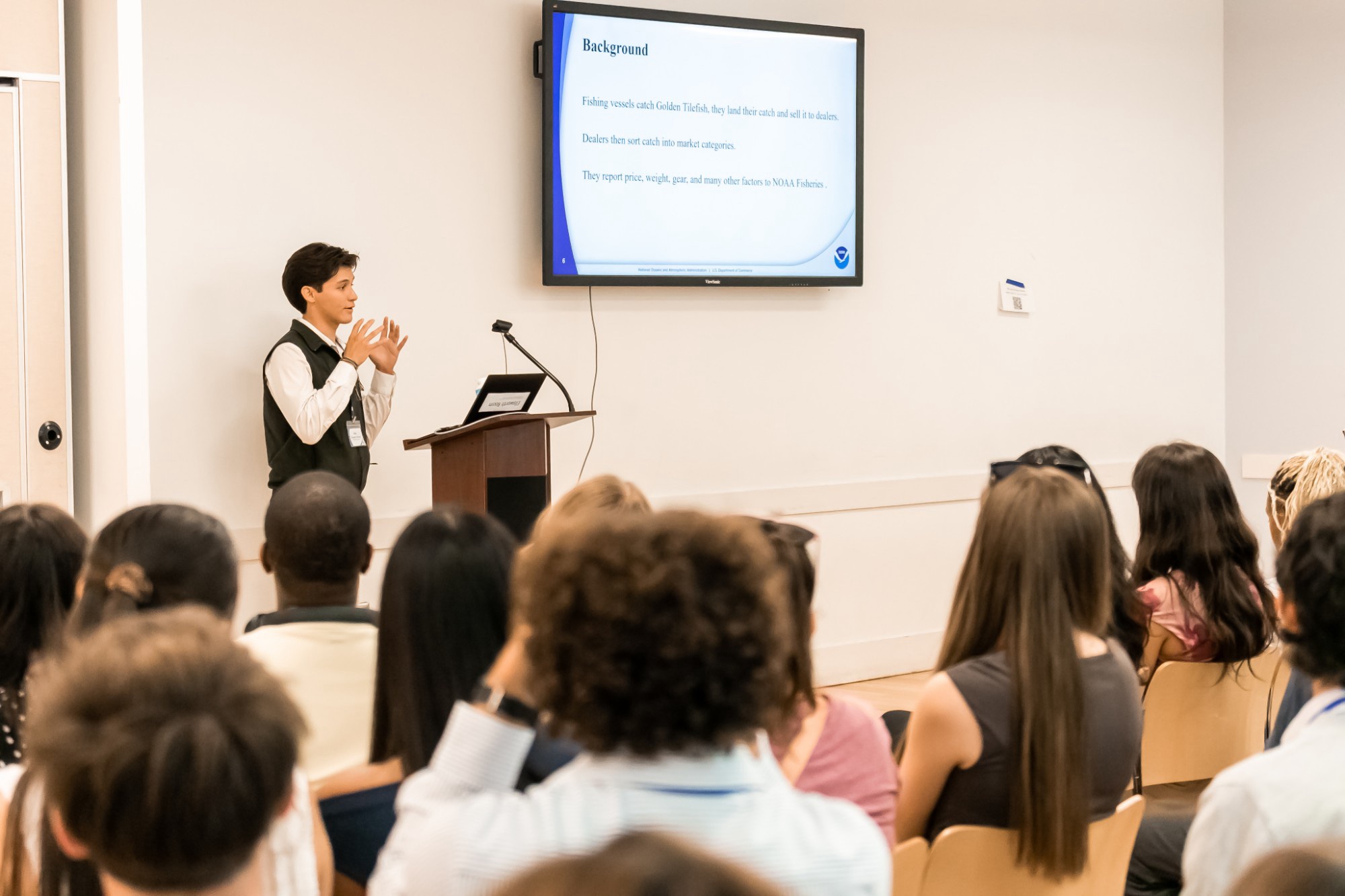
Presented 10-minute talk at 2026 NOAA Science and Education Symposium

Used prices to infer the size of unclassified Golden Tilefish and improve missing information used in fish stock assessments, where age and length structure are critical. Tuned, trained, and validated a Random Forest machine learning classification model using prices and other key predictors.

Iran Rosales1, Min-Yang Lee2, and Emily Liljestrand2

1University of Hawaiʻi at Hilo; 2NOAA Northeast Fisheries Science Center

Abstract

The age composition of commercial landings is a critical input to fish stock assessment. In the Northeast United States, NOAA Fisheries assigns samplers to fish dealers to gather the data needed for developing this information. In cases where there’s limited samples of a market category of fish, stock assessment modelers must make assumptions about landings. A portion of commercial landings are recorded without market category information in the Golden Tilefish (Lopholatilus chamaeleonticeps) fishery, which creates uncertainty in the characterization of catch size structure. Commercial dealer transaction data was analyzed to quantify relationships between market category and price. There are 6 common market categories: Extra Small, Small Kitten, Medium, Large, Extra Large, and Unclassified. We fit a categorical Random Forest to predict the probability that a transaction belongs to a particular market category using price as an explanatory factor. Incorporating these economically informed predictions reduced uncertainty associated with missing market information. We use the results to infer market category predictions and reconstruct price-informed length structures of commercial landings.
2024 – PresentNew Orleans, LA

Grain to Grain: Comparing Methods for Determining Sediment Size in Coarse-Bedded Streams in Hawaiʻi

Presented poster at AGU 2025

Comparative data analysis of grain size measurement techniques, including random point counts, gridded point counts, manual gridded measurements from orthomosaics, and automated grain identification using machine learning (Segmenteverygrain).

Iran Rosales1, Emma Lodes2, Kelin X. Whipple2, Nick Colaianne3, and Elowyn Yager3

1University of Hawaiʻi at Hilo; 2Arizona State University; 3University of Idaho

Abstract

In Hawaiʻi, stream beds are coarse grained and sediment size appears to play an important role in setting channel steepness and incision depth. Steep rainfall gradients make the islands ideal for studying how sediment grain size affects stream morphology. However, the boulder-rich bed material poses challenges to traditional methods and inconsistent grain size measurements limit our ability to quantify these relationships. This project compares four grain size measurement methods in streams across Hawaiʻi: random point counts, gridded point counts, manual gridded measurements from orthophotomosaics, and automated grain identification (segmentation) on orthophotomosaics using machine learning (Segmenteverygrain). In Segmenteverygrain, we calculated and compared grain size metrics from all grains, gridded point counts, and with/without multiple-counting of large grains encountered at multiple grid points. We use statistical tests to evaluate the relative merits and limitations of each method. Key factors include time to learn and apply the method, repeatability, comparability across studies, and suitability of the metric for answering our scientific questions. While both manual and automated analyses of orthophotomosaics require about three hours of work per image, Segmenteverygrain creates a reusable grain dataset, allowing multiple analyses. Our results reveal practical and efficient approaches for grain size analysis in coarse-grained, gravel bed and boulder-rich streams, while also demonstrating that overlooking the limitations of each method can lead to biased interpretations of sediment transport and stream dynamics.

03

Research Experience

  1. 2025 – PresentWoods Hole, Massachusetts · Hybrid

    NOAA Ernest F. Hollings Intern

    Northeast Fisheries Science Center

    • Used prices to improve fish stock assessments for Golden Tilefish.
    • Developed, trained, and validated a Random Forest model to infer the size of unclassified landings and reapportion market categories.
    • Used economic information to fill gaps in length and age data, improving estimates of the age and size structure of commercial landings.
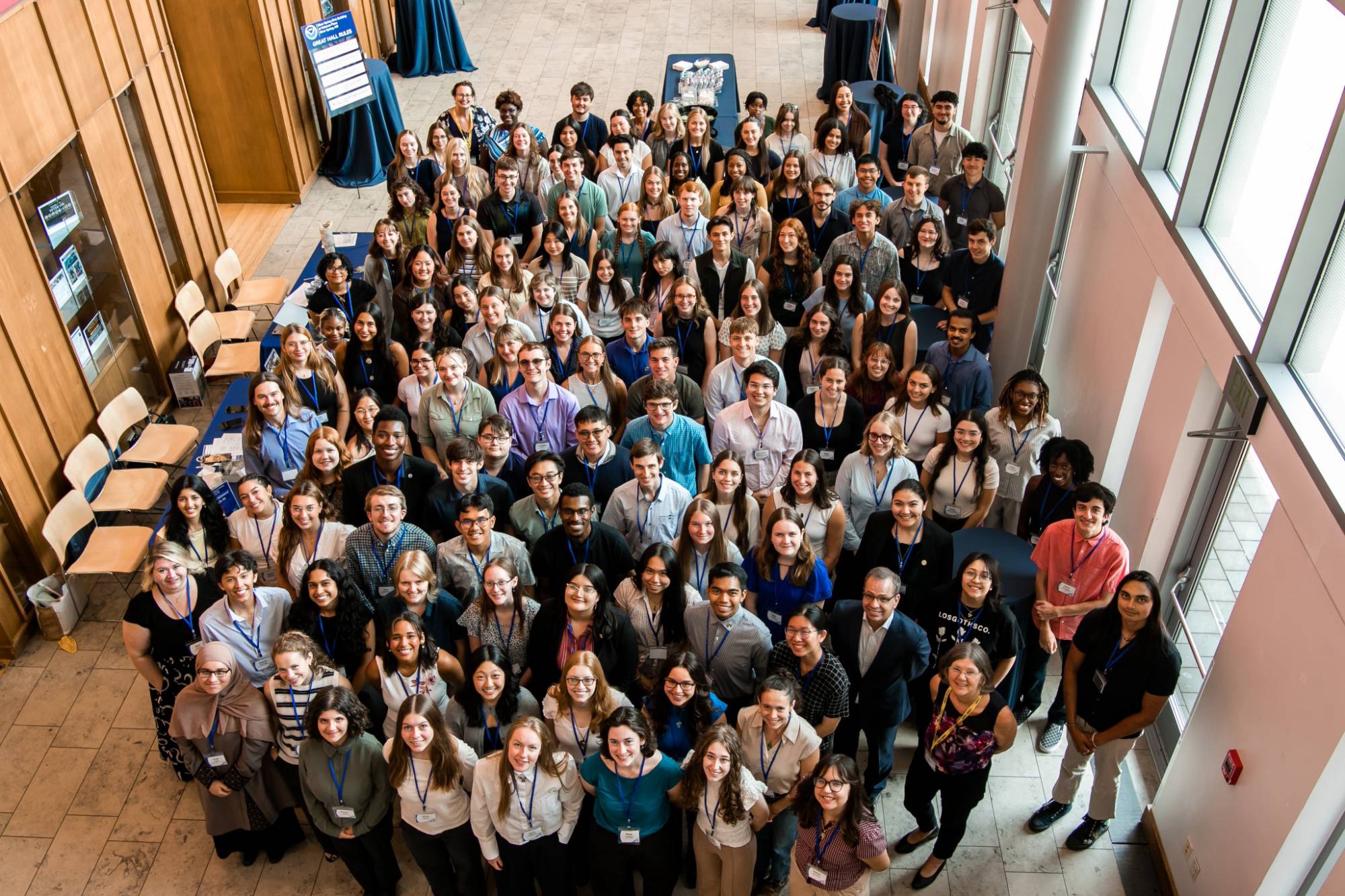
    Iran Rosales presenting Golden Tilefish research at a podium in front of an audience. Group photo of the NOAA Hollings cohort gathered in a building atrium.
  2. 2024 – PresentKauaʻi & Maui, Hawaiʻi

    Undergraduate Research Assistant

    Arizona State University, School of Earth and Space Exploration

    • Conducted stream surveys across the Hawaiian Islands, collecting sediment and geomorphological data using field methods such as pebble counts, laser rangefinder measurements, and magnetite sampling for erosion rate analysis.
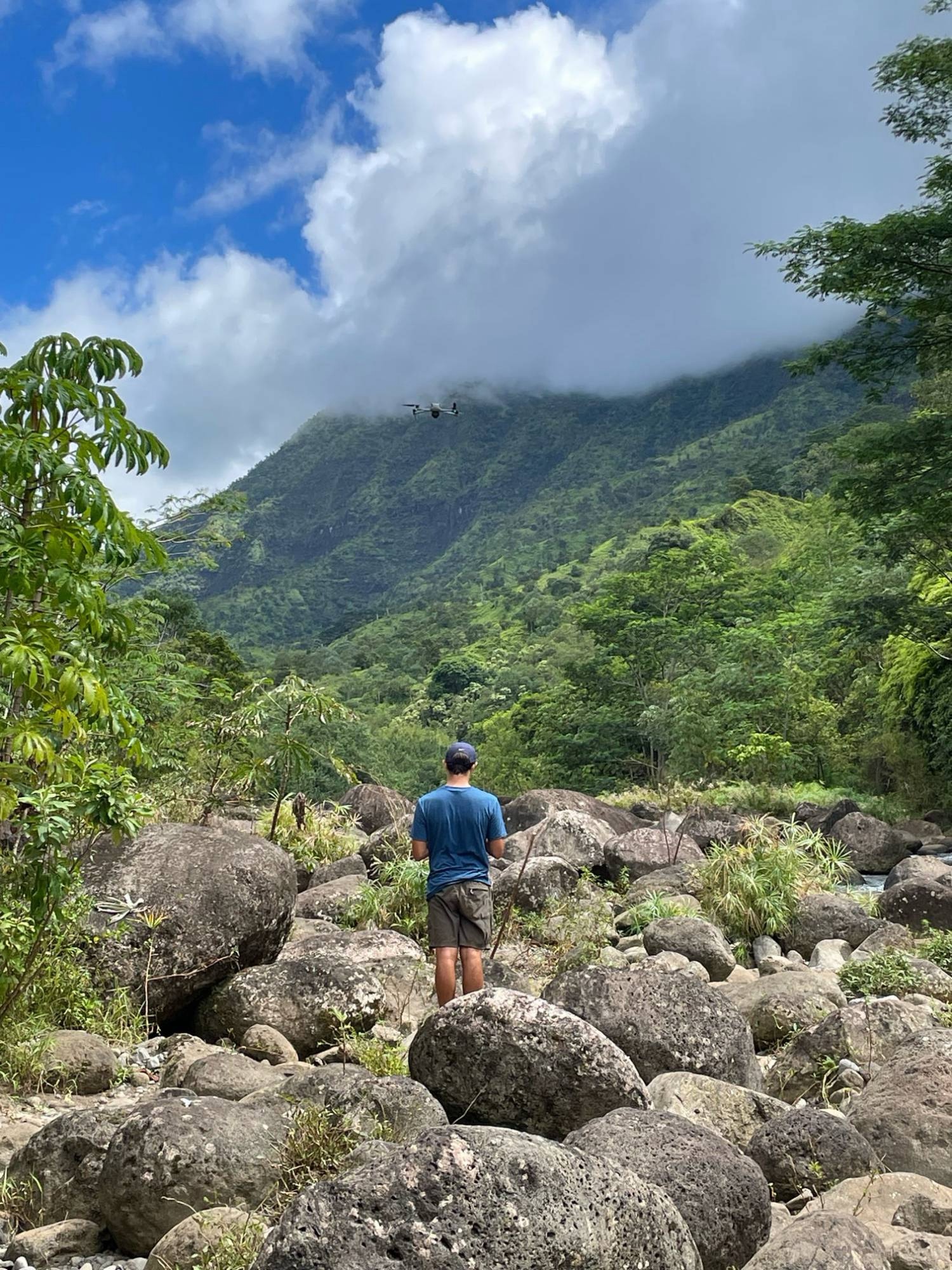
    • Operated drones to capture aerial imagery and build Structure-from-Motion models to assess sediment cover and channel morphology across rainfall gradients.
    • Supported with comparative data analysis of grain-size measurement techniques, including random point counts, gridded point counts, manual gridded measurements from orthophotomosaics, and automated grain identification (segmentation) on orthophotomosaics using machine learning (Segmenteverygrain).
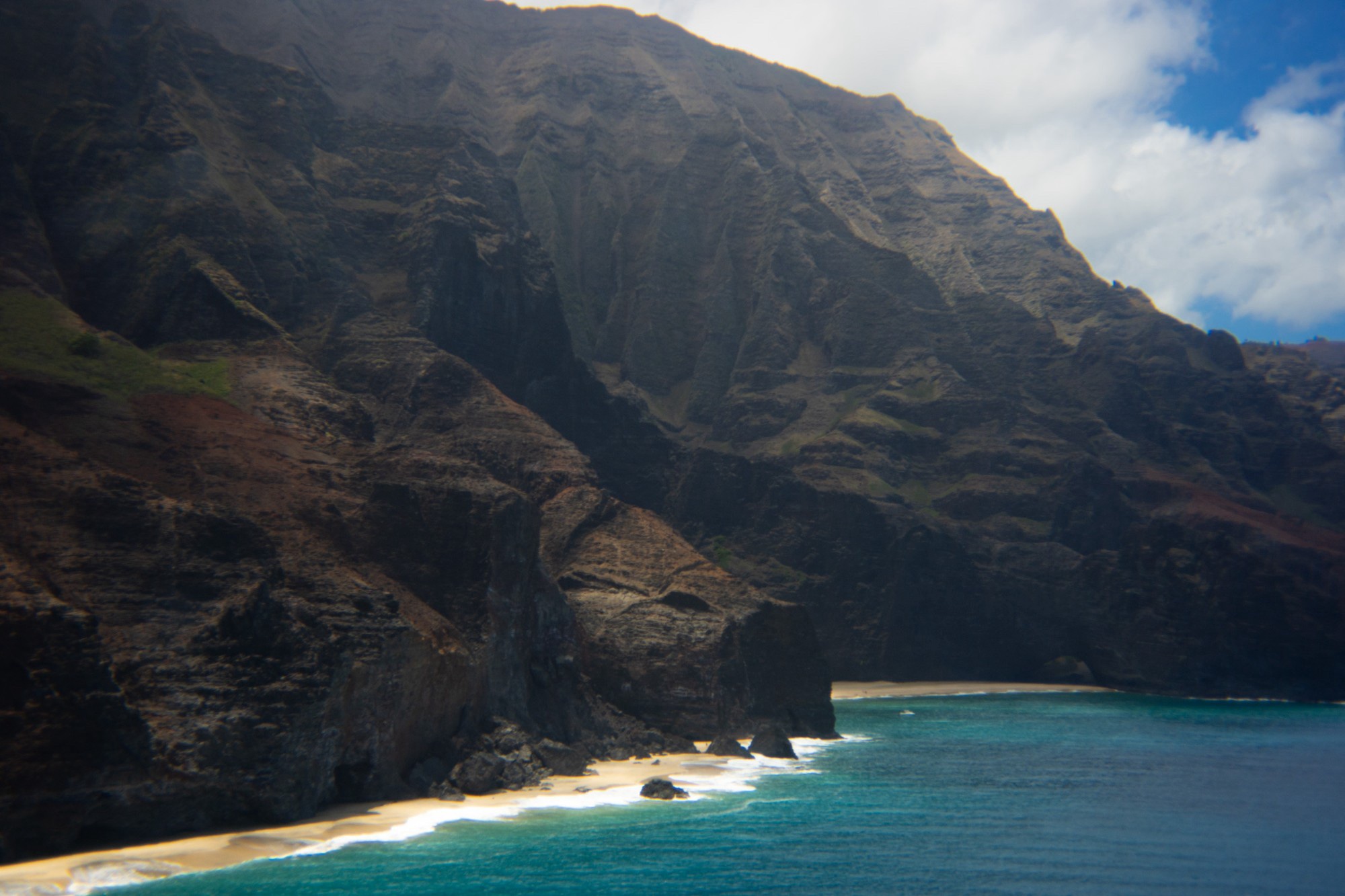
    Iran Rosales flying a drone over a boulder-filled stream below green mountains. Steep sea cliffs above a sandy beach and turquoise water.

04

Education & Skills

August 2023 – May 2027Hilo, HI

University of Hawaiʻi at Hilo

B.S. in Marine Science

August 2019 – May 2023El Paso, TX

Cathedral High School

High School Diploma, GPA 3.9

Skills

  • RStudio
  • Statistical Data Analysis and Visualization
  • Machine Learning
  • Python
  • Field Sampling
  • Drone Piloting
  • SfM Photogrammetry
  • Final Cut Pro and DaVinci Resolve
  • Microsoft Excel

05

Activities

Involvement

  • Marine Option Program (Certificate Program)
  • Hatch Blue Workshops: Venture Capital and Investment (2024–2025)
  • Spanish Tutor and Library Assistant, University of Hawaiʻi at Hilo

Hobbies

  • Golf
  • Surf
  • Film & Photography